Officiants & Your Ceremony
Information on Officiants who can perform a legal wedding ceremony in Scotland
and elements of the ceremony that you might like to consider

Different Types of Marriage Ceremony in Scotland
When you start thinking about it, it can get quite confusing! Hopefully the following will help,
There are two types of legal marriage ceremony you can have in Scotland
a civil ceremony – can take place in a registration office or anywhere (such as outside) as agreed with the Registrar, except religious premises. This is a non-religious ceremony conducted by a Registrar
religious or belief ceremony – can take place anywhere by someone approved to conduct a ceremony. These ceremonies can be religious or non-religious, legal and symbolic (non-legal). Religious bodies include, but are not limited to, Christian, Jewish, Muslim, Sikh and Hindu communities and organisations. Belief bodies include, but are not limited to, humanist, pagan, spiritualist, interfaith and agnostic communities and organisations and their ceremonies can be completely non-religious or contain elements of single or multi-faith religion, belief and spirituality.
For a non-religious wedding, both the Registrar and belief Celebrant will provide a similar type of wedding ceremony, hand-tying, drinking from the quaich and other elements. The difference is, a Registrar will be allocated to you from within the council area where you are getting married, will only meet you briefly before your wedding and the content of your ceremony will be fairly standard, although I’ve heard some lovely personal ones. For a belief Celebrant, you choose the Celebrant, they could be based anywhere, will take longer to get to know you, will write a very personal ceremony and some will get involved in more bespoke weddings (such as climbing hills) which a local Registrar may not do.
If you want a Registrar led wedding, you need to contact the Registry Office in the area where you are getting married and pay a deposit to book the date and you do this as early as possible to ensure you get a Registrar for the day. Later (12 weeks to 29 days before your wedding) you will pay the balance and send in your marriage paperwork (called the M10 form). You will probably have to meet the Registrar the day before your wedding to show your original paperwork (although this can be posted registered post and some may only meet you on the morning of your wedding).
For a Registrar led ceremony, your Registrar will bring your marriage schedule along on your wedding day and take it back with them after it is signed. You pay one fee (plus deposit and mileage costs) and that includes a Registrar on the day and your paperwork. Your marriage certificate will be posted to you by the Registry Office.
For a religious or belief Celebrant led ceremony, you choose and book the person you connect with and who will give you the ceremony you’re looking for. It is important to confirm that the officiant can conduct a legal wedding if that is what you are looking for. Nearer your wedding day (12 weeks to 29 days before your wedding) you send in your marriage paperwork to the local Registry Office (the M10 form). You will have to collect your marriage schedule the day (or few days) before from the Registry Office and show your original paperwork, and return your marriage schedule (or post it) back after your ceremony. A Celebrant led ceremony is often a little bit more expensive as you pay your Celebrant for their services (around £450+) and the Registry Office for your paperwork (£100 + postage currently). Your marriage certificate will be posted to you by the Registry Office.
Useful Documents to Read
Marriage in Scotland - mygov.scot
If you’re not a UK national please have a read of the following documents and any additional steps you may need to follow
Lovely elements to add into your ceremony
Hand-tying / tying the knot
-
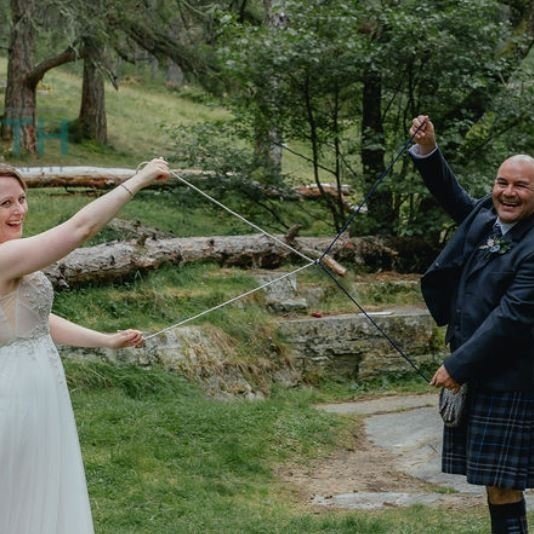
Hand-fasting is a Celtic/Medieval custom, common in Scotland, in which a couple came together at the start of their marriage relationship to declare of their own free will that they intended to marry.
While facing each other, the couple will join hands while ribbon(s), cord(s) or cloth is tied around their hands in a knot or where the material is laid in such a way that when the couple pull apart a knot is tied. This is where the term "tie the knot" came from.
Couples can choose to use cloth made of a particular clan tartan or a specific colour symbolising something important to them.
Hand-fasting is suitable for use in both weddings and civil partnership ceremonies.
-
It’s a fun part of the ceremony that normally adds some humour, especially if the knot doesn’t tie first time!
You need to bring along one or two ribbons, cords or strips of material, each approximately 1.5m long. Please let the Officiant know which hand-tying variation you are planning so they’re familiar with it.
Drinking from the quaich
-
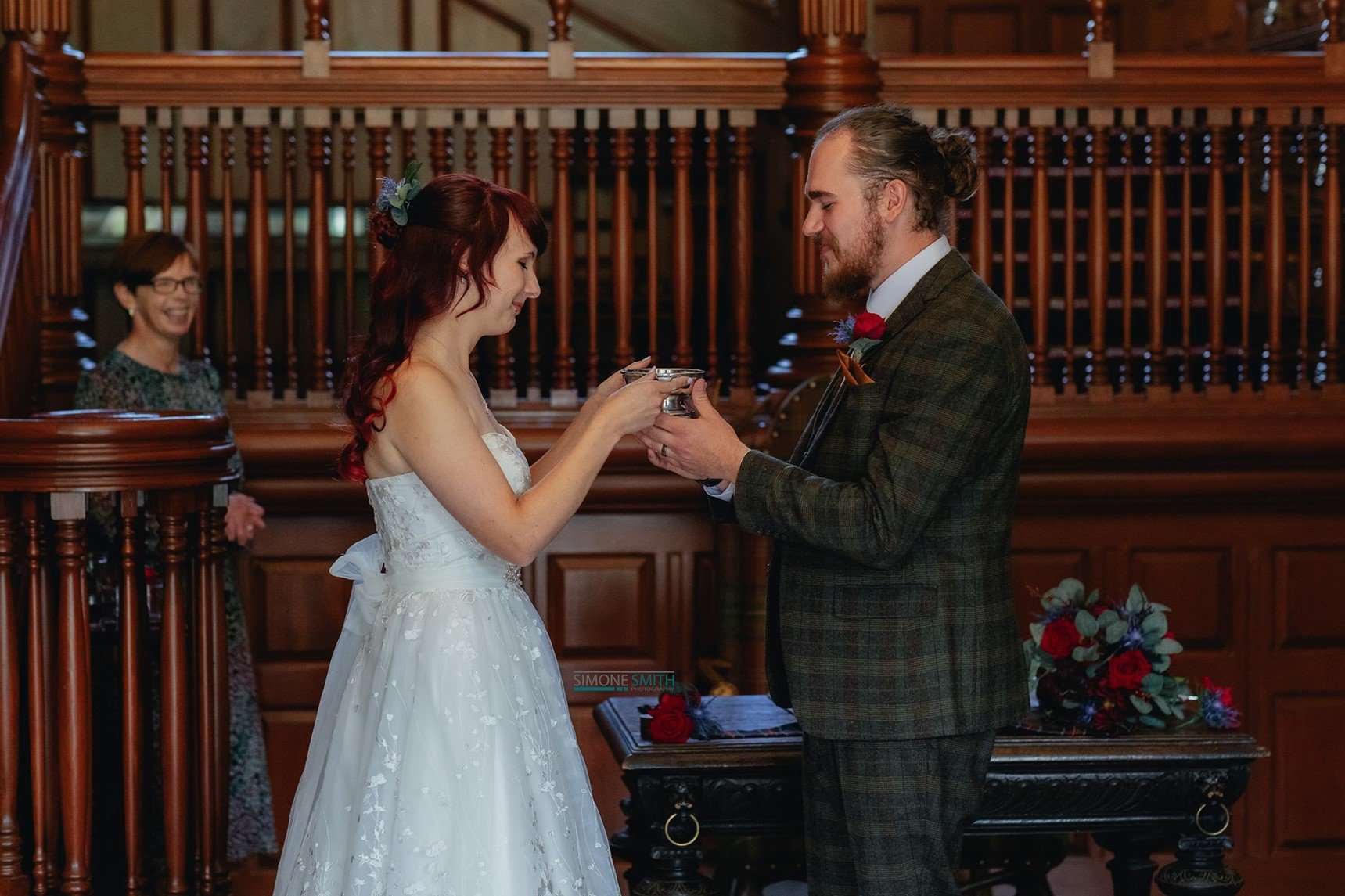
The Quaich was originally designed as a two-handled loving cup for the wedding feast. From it the couple took their first communion together as a married couple. They also used the Quaich at the reception for their first toast together.
Symbolic of the sharing between the couple and subsequently their families.
-
Traditionally whisky would have been used as the drink of choice but you can use anything you want!
We have Quaich you can borrow or we can help you purchase one. This company are good and delivery in the UK is quick. It is best to select a 4 or 5’’ Quaich
The oathing stone
-
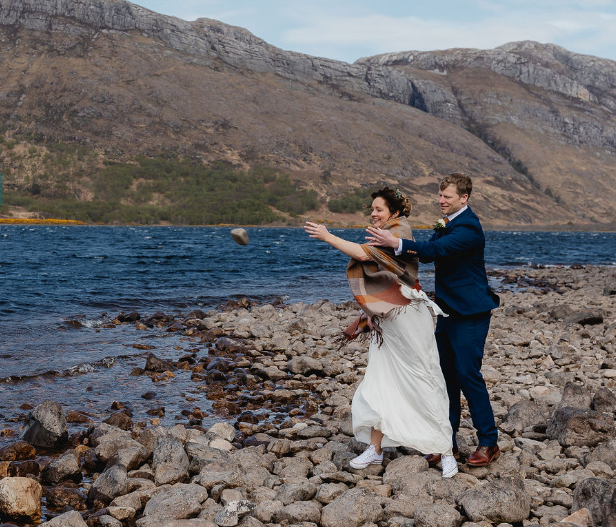
The Oathing Stone is an old Scottish tradition where the couple place their hands upon a stone while saying their wedding vows. Taken from the ancient Celtic custom of setting an oath in stone.
During the declaration of wedding vows or civil partnership promises, the couple hold the Oathing Stone, together in their hands. It is believed that holding the stone during the vows in turn casts or sets them in stone.
-
Any stone can be used for this purpose. One collected by the couple from a favourite place i.e. beach, local beauty spot etc would be appropriate. The stone should then be washed and scrubbed and treated with almond oil then wiped dry in order to give it a satin sheen (if desired).
The stone can also be engraved with a Celtic knot etching, the date of the ceremony and your initials if you wish - or you can simply throw away your stone into the river or sea as part of the ceremony!
Ring warming ceremony
-
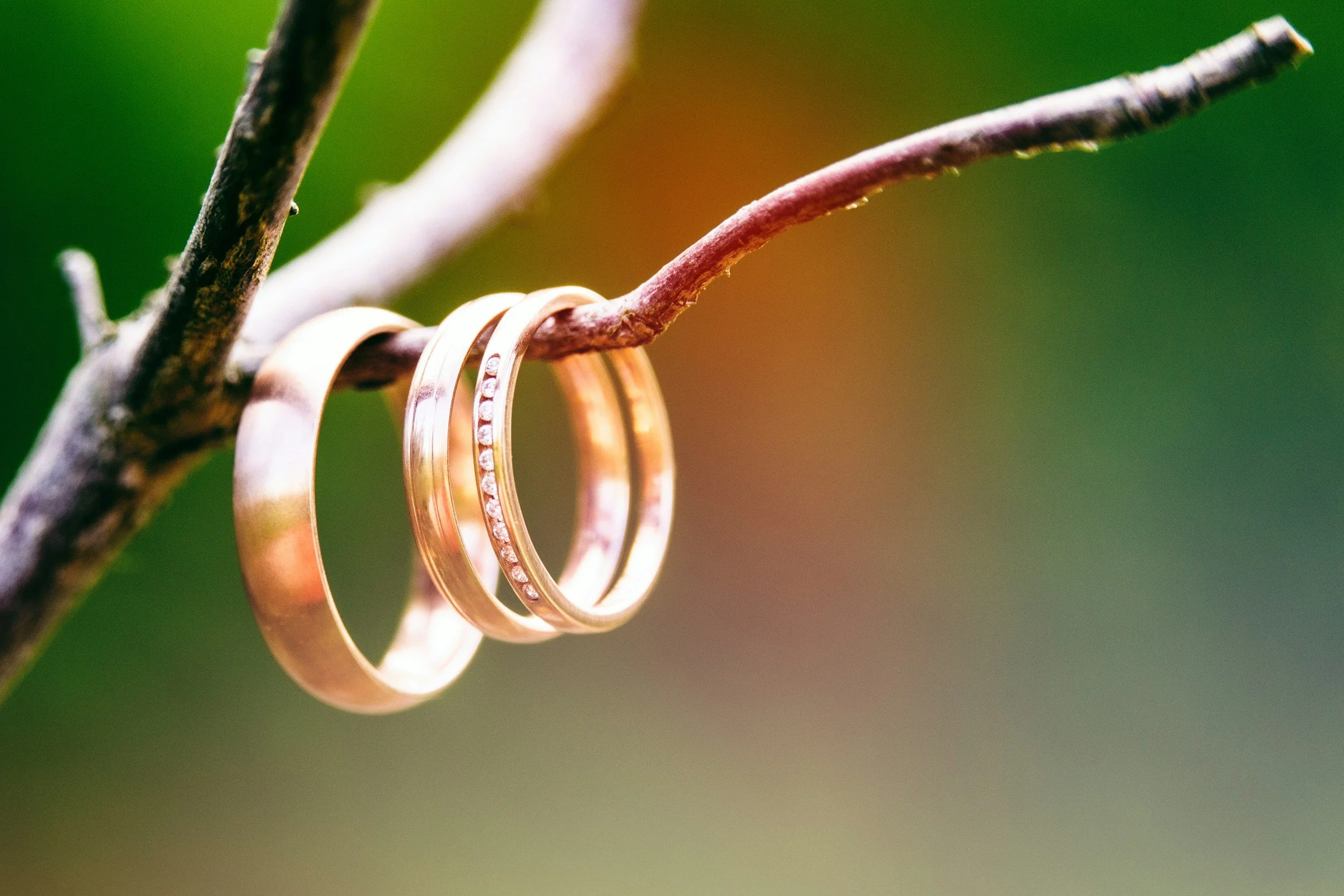
A ring warming is when you give your loved ones the opportunity to hold the couple’s wedding bands and perhaps make a wish, blessing or prayer for their marriage. By the time the rings make it on to the fingers of the couple they will be warmed with the love of their friends and family.
-
You will need:
Wedding ring/s, a string or ribbon the length of the rows of seats or long enough to be held by everyone in your party. At the appropriate moment in the ceremony someone can introduce the ring warming and start the rings on their voyage through your sea of guests
Other options would be to simply tie the rings together or to use a little dish to pass the rings along the rows
Registry Offices & Registrars
The Registrars at the Registry Office processes ALL UK marriage paperwork and you can talk to them about the legalities of marriage at any time.
A specific Registry Office will be designated to manage your paperwork, this is normally the one nearest to your wedding ceremony location but not necessarily.
You may need to go to the Registry Office to show original documents and collect your marriage schedule (if you have a celebrant wedding). Sometimes you can post all your documents instead.
A Registrar from the Registry Office can be booked to perform your non-religious, legal, outdoor wedding ceremony.
-
Nairn Registrars (covers Aviemore, Boat of Garten, Nethy Bridge)
01667 458559
The Court HouseNairn
Highland
IV12 4AU
Highland Council - website on marriages
-
Inverness Registrars (covers Inverness area)
01349 781131
The Highland Archive and Registration Centre
Bught Road
Inverness
IV3 5SS
Highland Council - website on marriages
-
Deeside Registrars (covers Banchory, Ballater, Braemar)
01330 700440
Bridge Street
Banchory
AB31 5SU
Marriages - Aberdeenshire Council
Marriage ceremonies - Aberdeenshire Council
Marriage in Scotland - Guidance Notes to help You Complete Form 10 (nrscotland.gov.uk)
-
Perth Registrars (covers Perth & Dunkeld)
01738 475121
3-5 High Street,
Perth
PH1 5JS
Getting married - Perth & Kinross Council (pkc.gov.uk)
Marriage legal requirements - Perth & Kinross Council (pkc.gov.uk)
Marriage and civil partnership fees - Perth & Kinross Council (pkc.gov.uk)Marriage in Scotland - Guidance Notes to help You Complete Form 10 (nrscotland.gov.uk)
-
Dingwall Registry Office (covers Dingwall, Torridon areas)
County Buildings
84 High Street
Dingwall
IV15 9QNHighland Council - website on marriages
-
Fort William (covers Fort William, Glencoe, Ben Nevis areas)
01349 886606 / 01397 704583
Email fortwilliamregistrars@highland.gov.uk;
Achintore Rd
Fort William
PH33 6RQ
Highland Council - website on marriages
-
Portree Registry Office (covers Isle of Skye)
Tigh Na Sgire, Park Lane, Portree IV51 9GP
Email Portree and Raasay Registry Office
Website: Visit Portree and Raasay Registry Office
Highland Council - website on marriages
-
Mull Registry Office (covers Mull, Coll & Iona)
Address: Breadalbane Street, Tobermory, Isle of Mull, PA75 6PX
Tel: 01546 605521 (Option 6)
-
Isle of Bute
Samantha Gillies, Rothesay Customer Service Point, 37 Victoria Street, Rothesay
Isle of Bute PA20 0ANEmail Samantha.Gillies@argyll-bute.gov.uk
Tel (01546 605521 - Option 2)
Celebrants
Belief Celebrants can be completely non-religious or include elements of faith and spirituality. Celebrants can perform legal and non-legal weddings.
If you book a celebrant you WILL need to go to the Registry Office before your wedding to collect your marriage schedule and return it afterwards.
-
Humanist Celebrant
07794874318
ashton@humanistassociationscotland.com
www.humanistassociationscotland.com
facebook.com/humanistassociationscotland
instagram.com/humanistassociationscotlandBased in Edinburgh but will travel anywhere in Scotland
Humanist weddings are non-religious.
Ashton’s fee for 2025 was £495 + travel costs.
Sarah says: Ashton is very friendly and good company. Ashton will very happily walk up a hill or cycle to meet his couples in wild and remote places and travels across Scotland.
-
Humanist Celebrant
07748651742
Celebrant Profile – Humanist Society Scotland Portal (humanism.scot)
https://www.facebook.com/sheonareadhumanistcelebrant/
https://www.instagram.com/sheona.read.humanist.celebrant/
Based in Aboyne Aberdeenshire. Cost 2025 is £500 + travel
Humanist weddings are non-religious and you will need to join the Humanist Society for a year or two as part of your booking fee which is £98. This supports the charitable work of the HS, secures your date and guarantees you a back-up celebrant on the day should that be required for any reason.
Sarah says: Sheona is a lovely person and very friendly.
-
07732 454 639
hello@andrewdscottcelebrant.com
(1) Andrew D Scott Celebrant | Kinross | Facebook
Andrew D Scott Celebrant Services
Based in Kinross but travels across Scotland.
You are welcome to add a cultural or religious tradition into your ceremony as you support The Fulcrum belief in Equality, Common Purpose, Tolerance and Compassion.
Sarah says: Andrew is extremely amusing and fun and comedy are a big part of his ceremonies.
-
Celebrant Profile – Humanist Society Scotland (HSS) Portal (humanism.scot)
Hello, I'm Ali and I love being a celebrant!
I particularly love the fact that humanism is inclusive and celebrates equality & diversity.
Based in Edinburgh
2024 prices - £450 and £98 HSS booking fee
-
07837 949391
I follow a Nature based spiritual path and I am proud to be part of the Scottish Pagan Federation but your ceremony will be written to reflect your beliefs and your customs.
Based in Inverness
2026 prices are £560-600 + travel costs.
Sarah says: Laura is extremely friendly and her ceremonies are different and very much based towards nature.
-
Phone
07855 072636Facebook
Anne Armstrong CelebrantEmail
annearmstrongcelebrant@gmail.comInstagram
@solway_celebrantHello! I'm Anne, a life celebrant with Agnostic Scotland.
As a celebrant, I love working with couples and families to tell their stories. I craft bespoke ceremonies which truly reflect who you are, and your beliefs and values.
Sarah says: Anne is wonderfully warm and friendly, a great celebrant.
-
07904 862228
email: halde@humanity.scot
My name is Halde, and it was Caithness where I was born and raised, on a farm no less, where I spent most of my days! And I love nothing more than absolutely smashing wedding ceremonies!!!
I love people! And all my previous vocations and adventures have all had that very thing at it's heart.
Sarah says: Halde is very funny, he also has a job as a comedian!